


The recorder is definitely my sound
- quintessenz

- 16. Apr.
- 4 Min. Lesezeit
Aktualisiert: 14. Mai
Bearing the unusual title 'You Made Me Laugh', the new album by Danish recorder soloist Clara Guldberg Ravn features more than just mainstream Baroque music. It also features rarely heard compositions by Georg Philipp Telemann.
Beatrice Ballin interviewed the artist about the story behind it for pizzicato.
“You Made Me Laugh” – that’s a CD title that piques curiosity. What prompted you to choose this title?
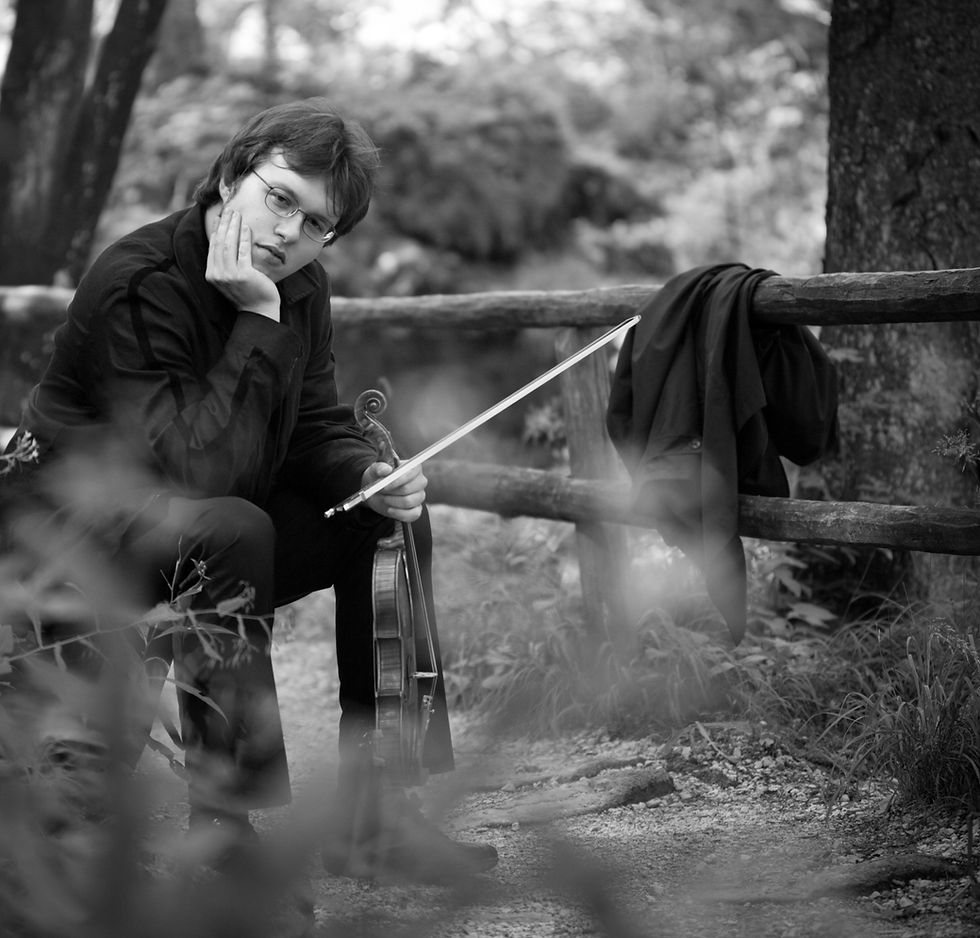
A very dear friend of mine took the photo that ended up on the cover. He made me laugh so often, even while taking the photo. I knew I had to call the album ‘You Made Me Laugh’ because he did just that. I love it when classical albums have titles that go beyond the music played on them. I have also given my previous albums titles that link to the music or the process of creating it.
Unlike his contemporaries George Frideric Handel and Johann Sebastian Bach, Georg Philipp Telemann does not hold the same prominent place in the public consciousness. Yet his talent is often overlooked. What defines his musical output?
Telemann wrote more music than Bach and Handel combined. A master of the principal styles of his time — German, French and Italian — he wrote with ease and fluency in all of them, often absorbing influences from Polish and English music. Much of Telemann’s music offers a wonderful combination of wit, virtuosity, and drama. While his music is light and cheerful on the surface, beneath it you can always hear his sorrow and seriousness. He wrote freely and idiomatically for many different instruments (he himself mastered several of them) including the recorder, for which he wrote a great deal of music.
Telemann wrote many compositions for the recorder. Was it difficult for you to make a selection for your CD?
Telemann wrote many pieces for the recorder in various combinations, but only two concertos for recorder and orchestra. These were therefore an obvious choice for this album.His Overture in A minor is a well-known piece as well, which I wanted to make an interpretation of. The last Overture in Eb-major has only been recorded a few times and is rarely played. It is written for a flute pastorelle, which most likely refers to a recorder as the recorder was often used to evoke pastoral imagery. It is a lighter and less substantial piece in all aspects though charming in all its ease. I think it’s important and enjoyable to record compositions that haven’t been recorded many times before. For example, some years ago, I was the first person ever to record all of the sonatas by the 18th-century Danish composer Martinus Ræhs.
For your album, you chose two overtures and two concertos. In your interesting booklet, you write that the F major concerto is one of your favorites. What makes this work so special for you?
Some pieces you just fall in love with instantly. This concerto was one of those. I heard it for the first time as a teenager, and it has followed me since then, especially the second movement is an amazing movement.
Telemann’s aim was to make his music accessible to everyone and to give everyone the opportunity to make music themselves. How did he achieve this?
Telemann was a prolific composer who produced a vast body of work for professional and amateur musicians alike. He was interested in giving everyone the opportunity to perform and enjoy music. He founded a biweekly music periodical, Der getreue Musikmeister (The Faithful Music Master) in 1728. The first of its kind, it consisted of new music given its first circulation in this unusual fashion. Much of it was by Telemann himself, but other contemporary composers were also represented. In this manner, arias, fugues, canons, and sonatas quickly became the favorite common property of the wealthy Hamburg citizens. Music lovers eagerly awaited the next episode to complete their favorite sonata. Furthermore, Telemann also wrote methodical sonatas in which he had written his suggested ornaments for all the slow movements.Another testament to Telemann’s commitment to making music accessible to all is evident in his efforts to create high-quality church music, which he considered to be of the utmost importance. Those who could not afford to attend the opera or concerts, learn to play a musical instrument or buy sheet music were still able to enjoy music every Sunday and on church holidays.
At what age did you begin playing the recorder? And when did you realize that the recorder was truly your instrument and that you wanted to become a musician?
When I was a child, my mother had an album featuring Michala Petri, which I remember listening to and thinking: I want to do that, too! My mother asked me once or twice if I wanted to play the piano instead, but I was determined to play the recorder.I started playing the recorder at the local music school when I was six. By the time I was thirteen, I loved it so much that I decided I wanted to be a musician. I stuck with that idea, although I took a few detours during my teenage years — even though studying English literature at university hardly counts as a detour. I never stopped playing and always came back to my dream of becoming a professional musician, which makes me very happy today. There are so many beautiful instruments and sounds in the world, but I love the sound of the recorder. It is definitely my sound. Along with laughter, hopefully.


Kommentare